Aanisha | Designs
Artsee
November 2025
Reimagining an upcoming artists’ app experience to get exposed to more opportunities
Background
While chatting with a friend who’s a local artist, I started thinking about how hard it can be to get work seen or sold. As I spent more time looking into the art world, I started to notice how galleries and exhibitions often feel a bit closed off, with limited clarity around selection, pricing, or what opportunities are actually available. For me, that lack of transparency seems to make it harder than it needs to be for artists to find fair, accessible ways into the art market.
My role
Researcher
UX Designer
Project Goal
My goal was to design an empowering platform for emerging artists, enabling them to discover, apply for, and participate in gallery and exhibition opportunities with accessible information.
Research
To get a better understanding, I interviewed local artists and dug into existing research, alongside looking at similar platforms and initiatives.
A few themes kept coming up – there was a strong desire to support local artists through genuine community engagement, alongside a real need for more transparency around exhibition opportunities and application processes. I also kept hearing about the lack of standardised contracts and clear venue directories, as well as ongoing frustrations around visibility, footfall, and fair compensation.
Key themes I identified:

Personas
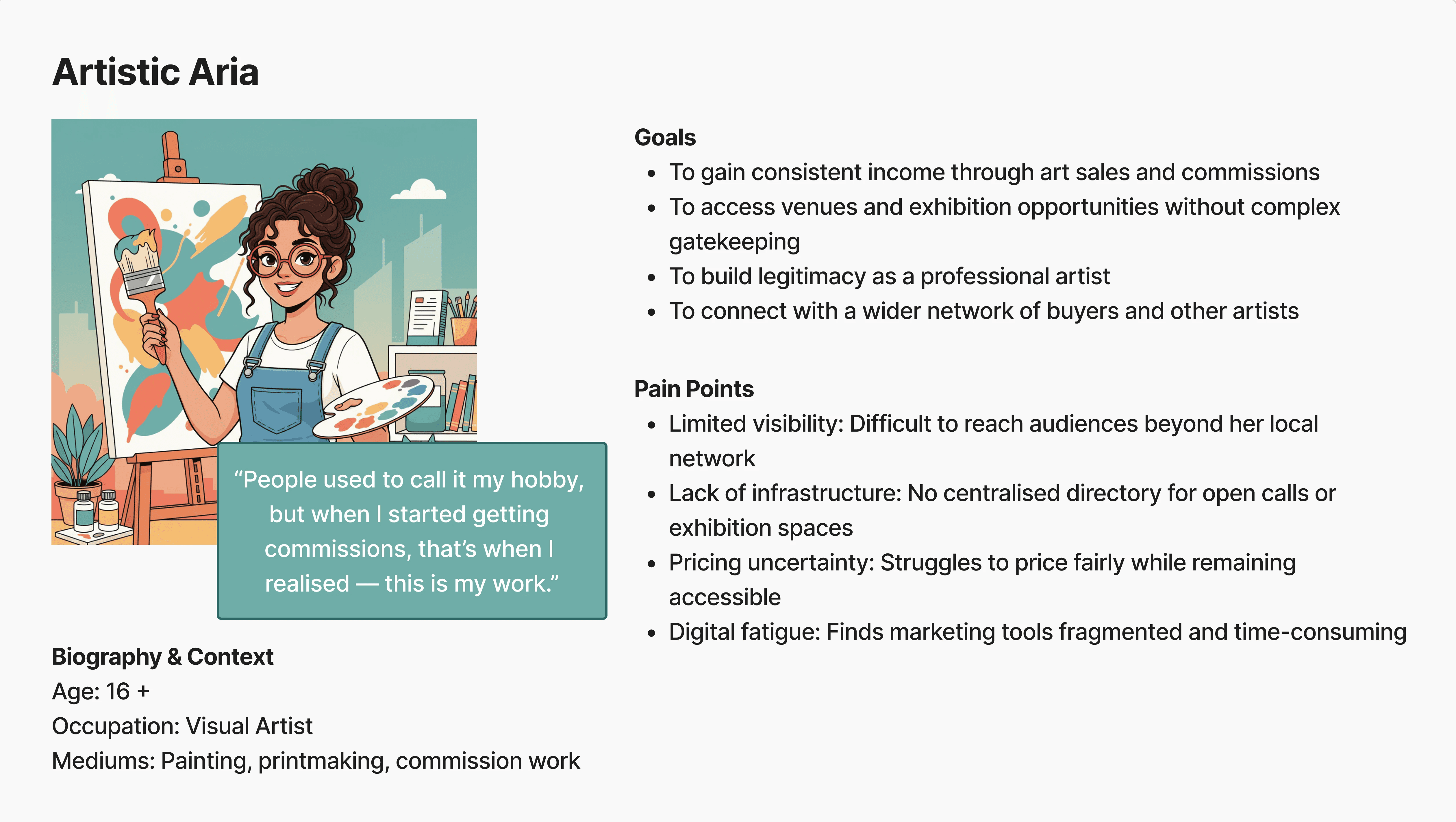
I came up with two key personas, the artist and the curator, but focused more on the artist's needs and expectations.
Key Takeaways from Persona 1:
Challenge to build network
Struggle to find opportunities nearby
Lack of consistent income
User Flow
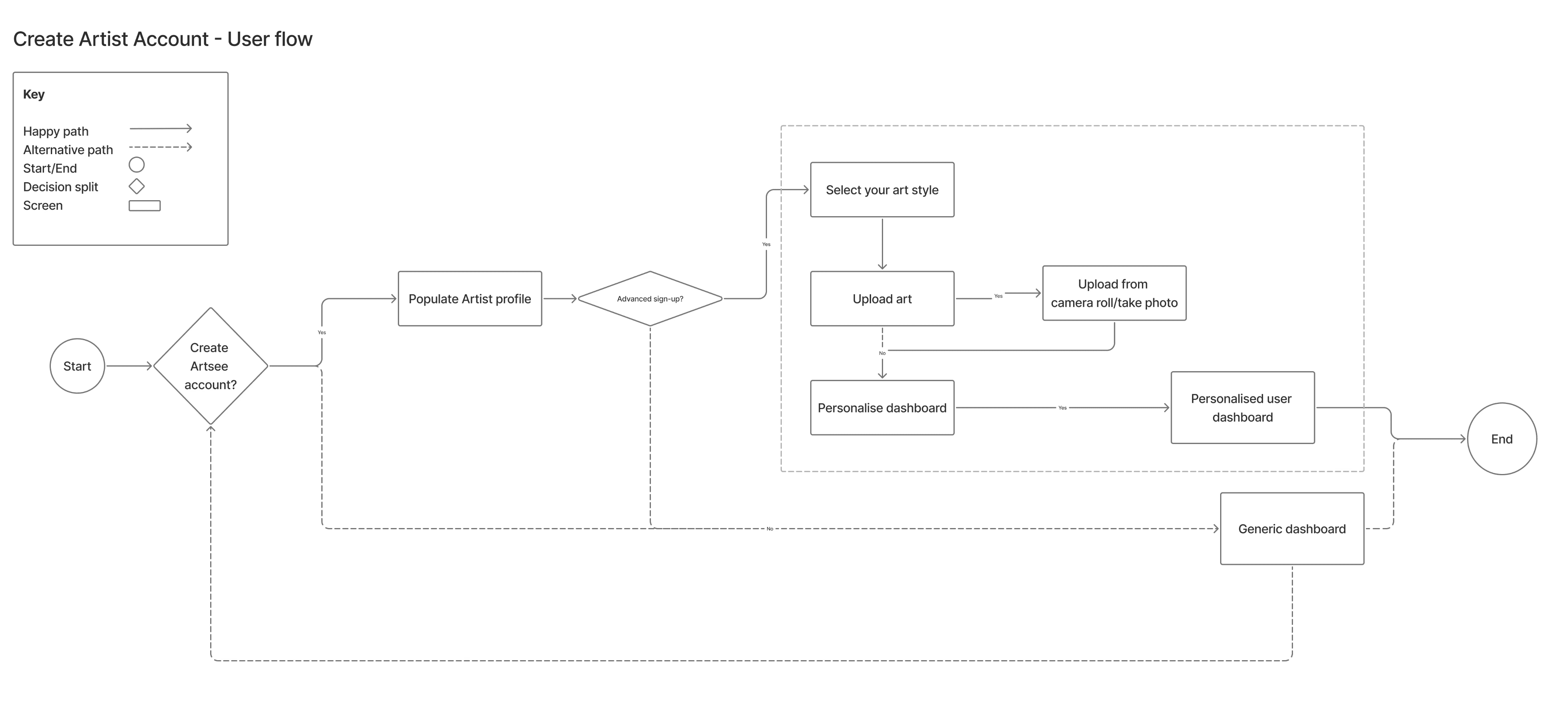
During my interviews with the artists, I found a mix of preferences during the onboarding process. This is the artists' first impression of the app and I found that many mentioned wanting to test run and browse the app before creating account. With this in mind, I came up with 3 paths.
User flow paths
Create account > Generic dashboard | From the interview, participants mentioned they wanted to be browse the app before committing to creating an account.
Populate profile > Generic dashboard | Participants mentioned wanting a quick sign up flow to get started and later update their profile as needed.
Populate profile > Advanced set up | Participants wanted certain personalisation at the onboarding stage itself so they could get tailored feed and access
The Design Process
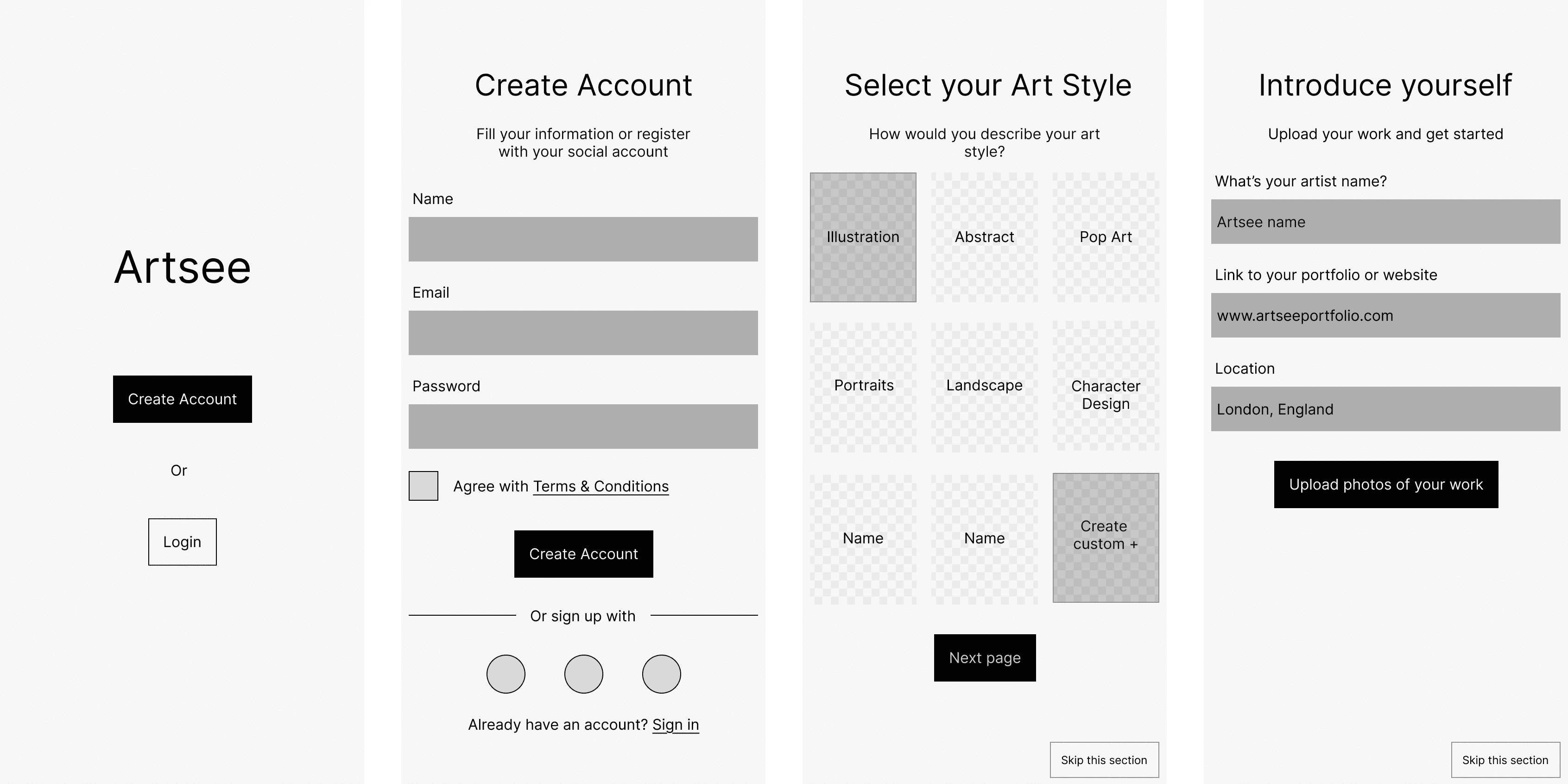
Sketches & Initial Concepts
I decided to prioritise the onboarding process and explore how it could best meet their needs while including as many of the key elements as possible. This was something that frequently got flagged in through the interviews I conducted.
Testing and Iterations
Sequence of wireframes were updated to reflect a more logical flow for the artists.
Users expected to input and have access to a lot more information than originally expected.
Wanted the branding to feel "fresh" and "exciting".
Branding
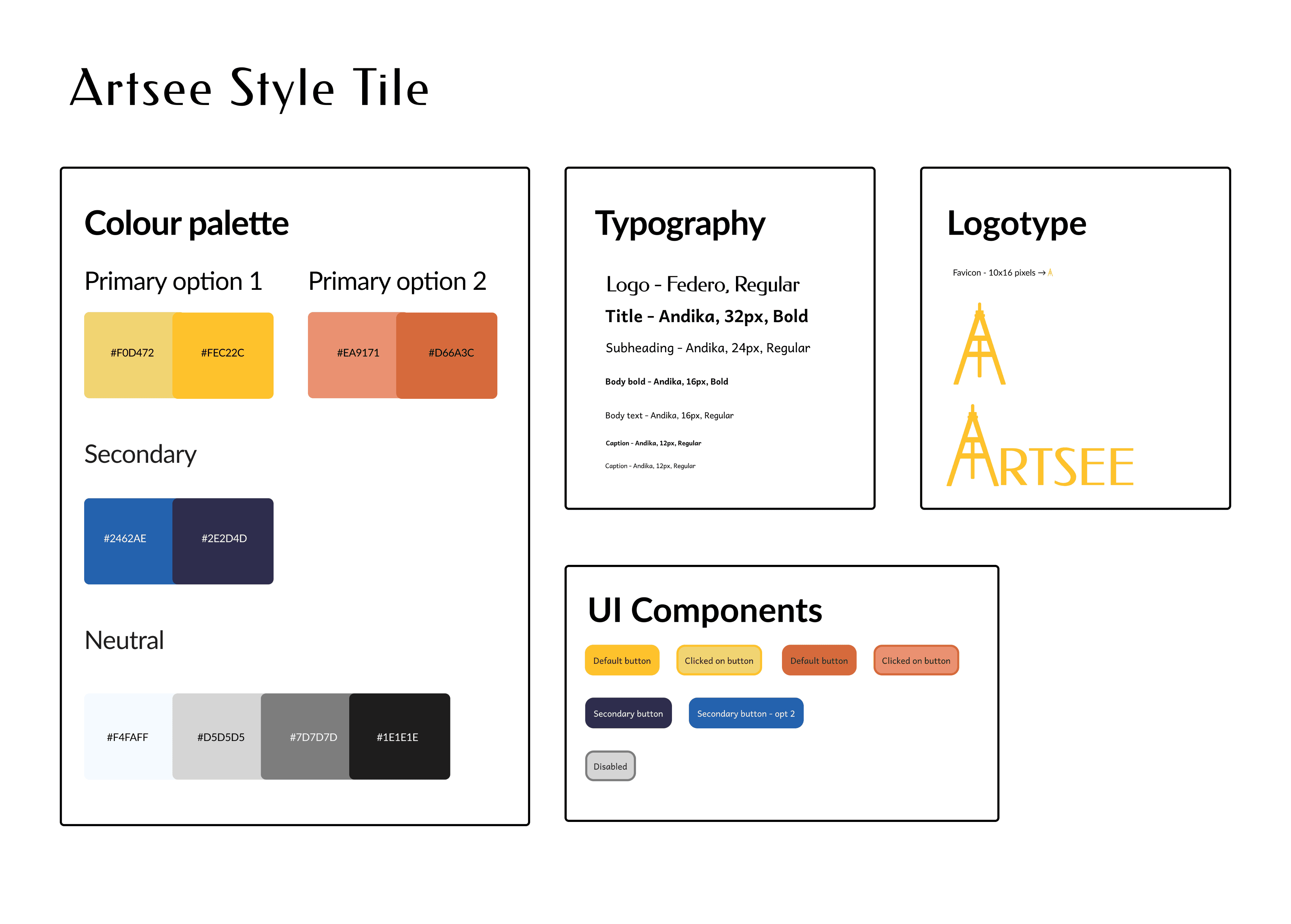
After conducting usability testing on my wireframes, I wanted to get an insight on how the artists wanted the app and overall brand to feel. Once of the questions I asked was "if you had to describe yourself using a colour, what would it be?" Interestingly, 5 out of 6 participants answered with the colour yellow. The remaining participant answered with "orange or peach".
Branding decisions:
Opt 1 | felt more fun, modern and vibrant
Tested options to see which colour palette would resonate better with Artists and shared options 1 and 2 as primary colours where option 1 was chosen.
Typography | Federo was eventually used for the titles and Lato for body text for readibility.
Logo was liked by artists as it felt modern and clean with a play on "A" to reflect an easel - a recognised symbol for art.
Prototype and Iterations
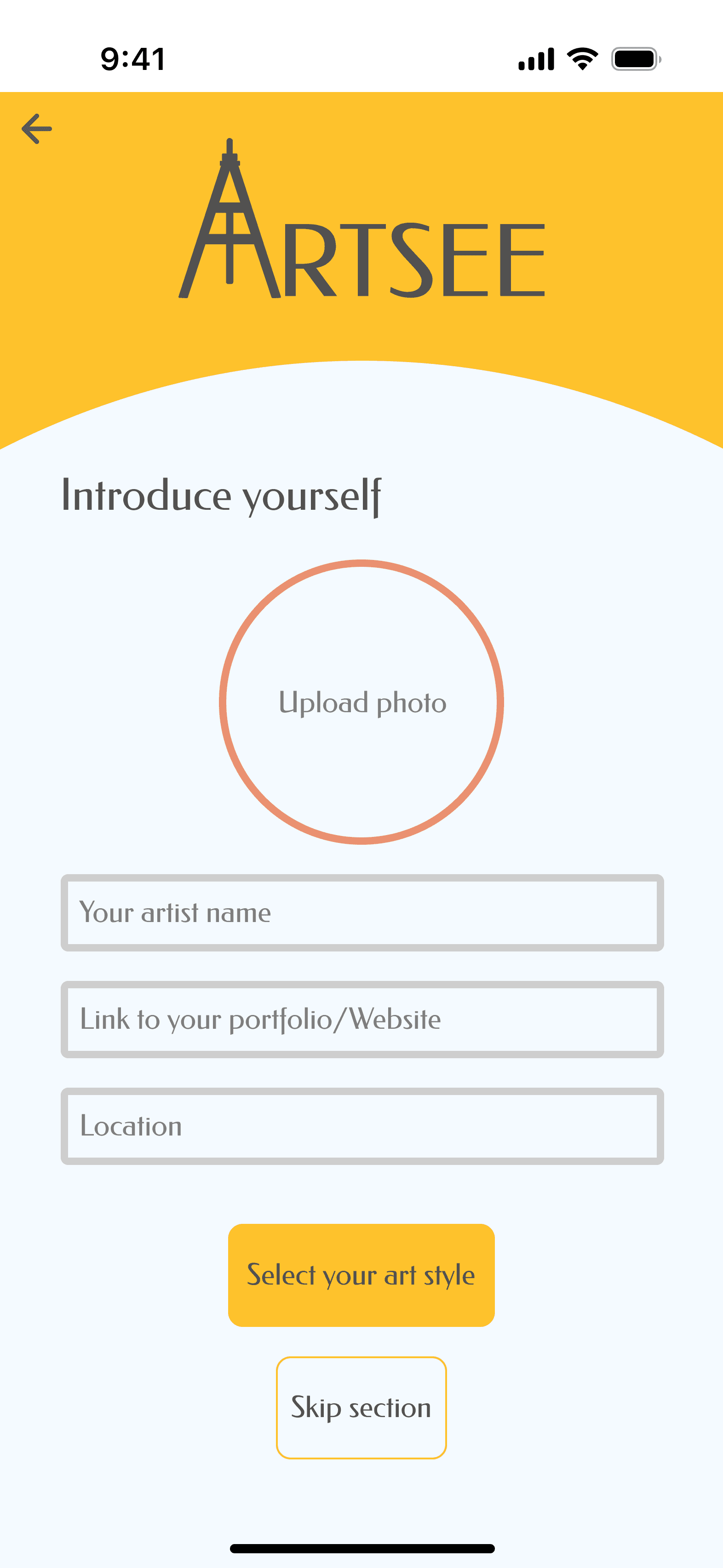
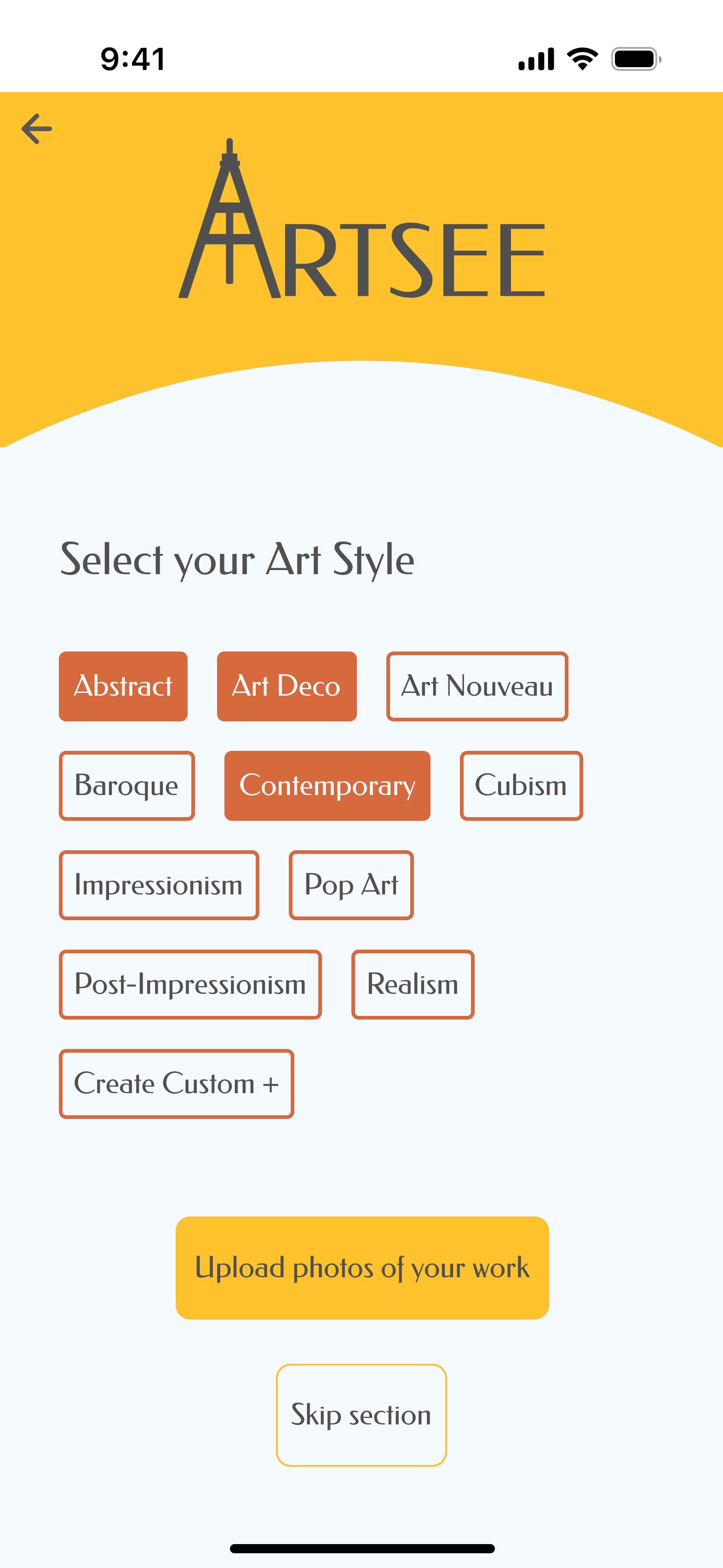
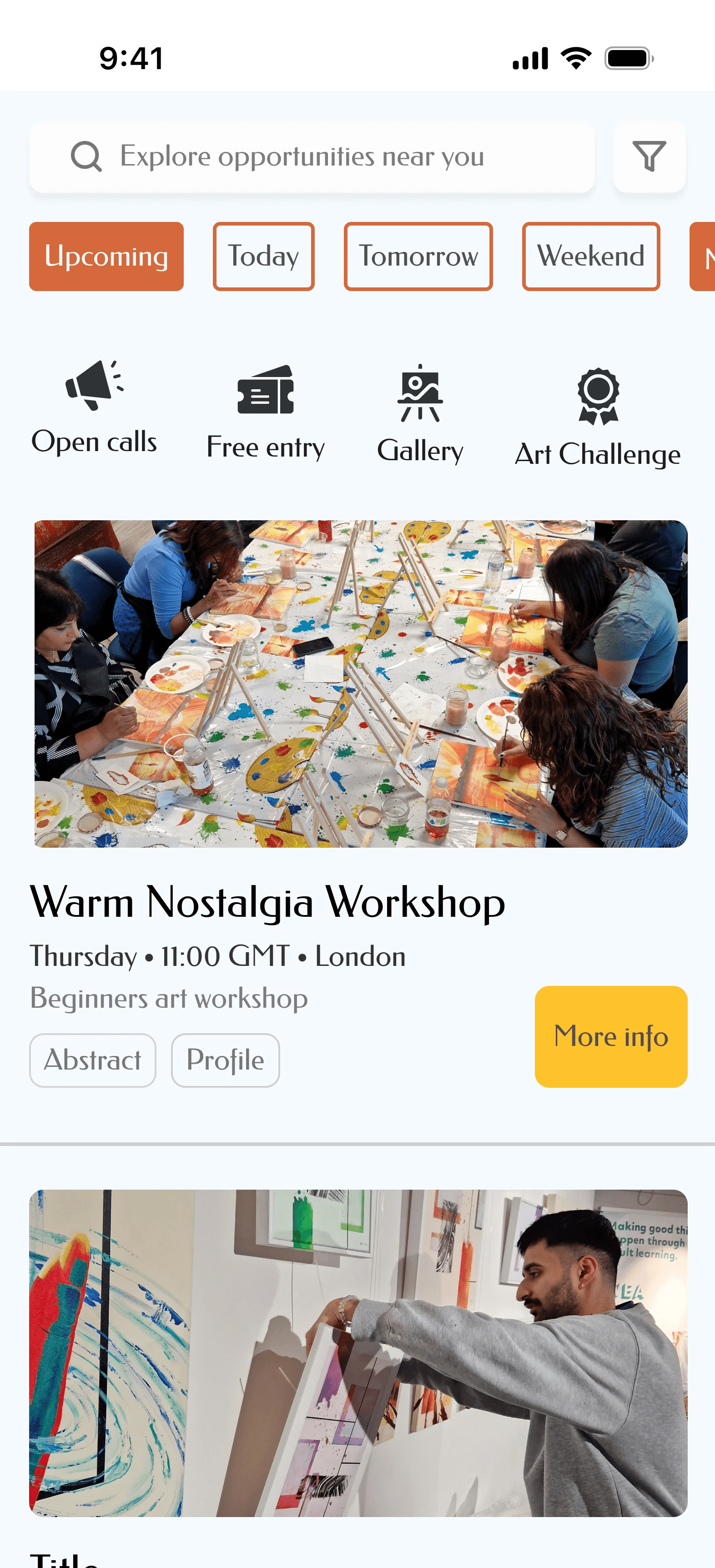
Feedback I received after initial user testing:
Typography is making it too difficult to read through dense sections
Buttons and tags are confusing.
Buttons could be longer at the sign up stages
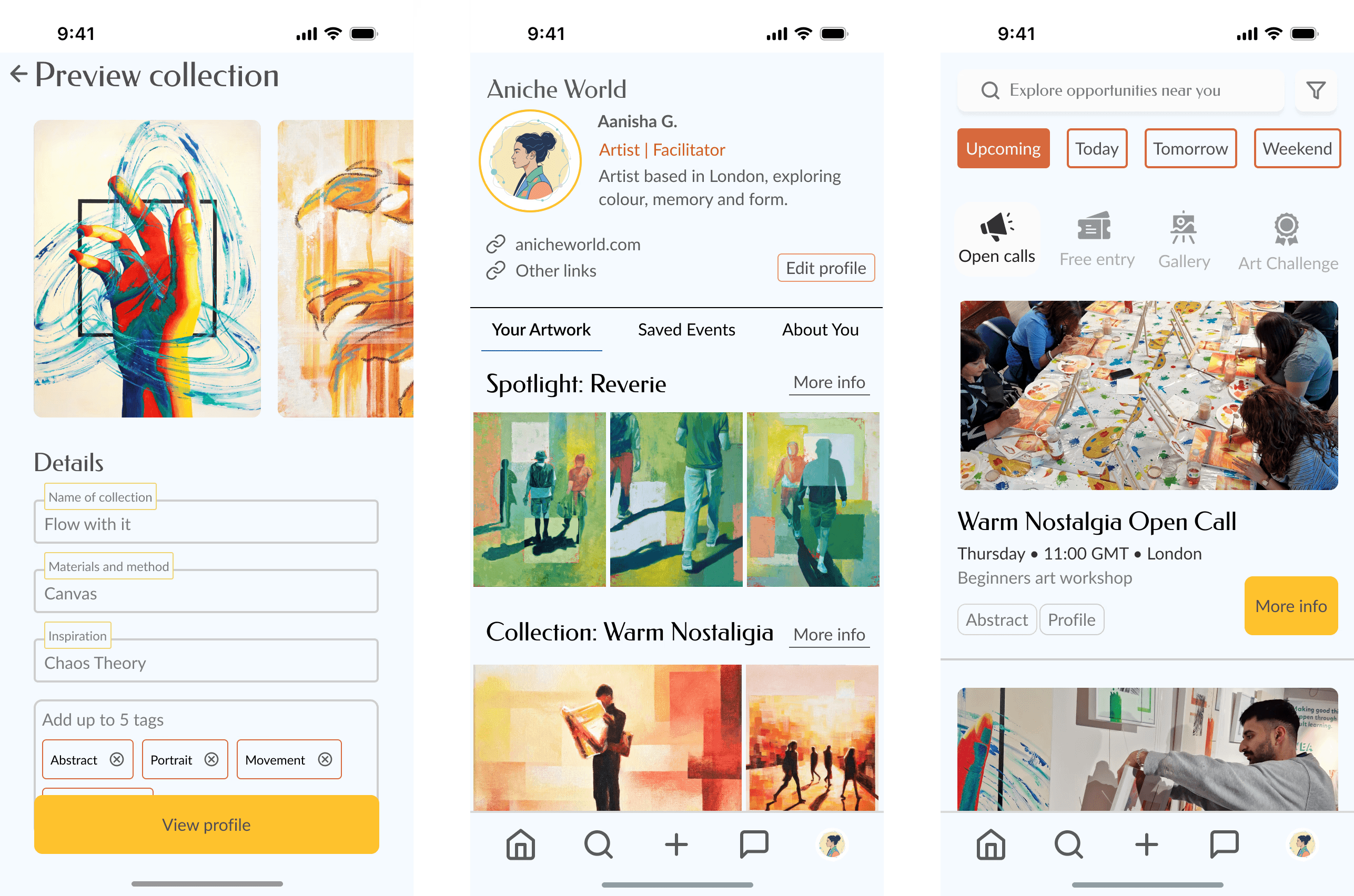
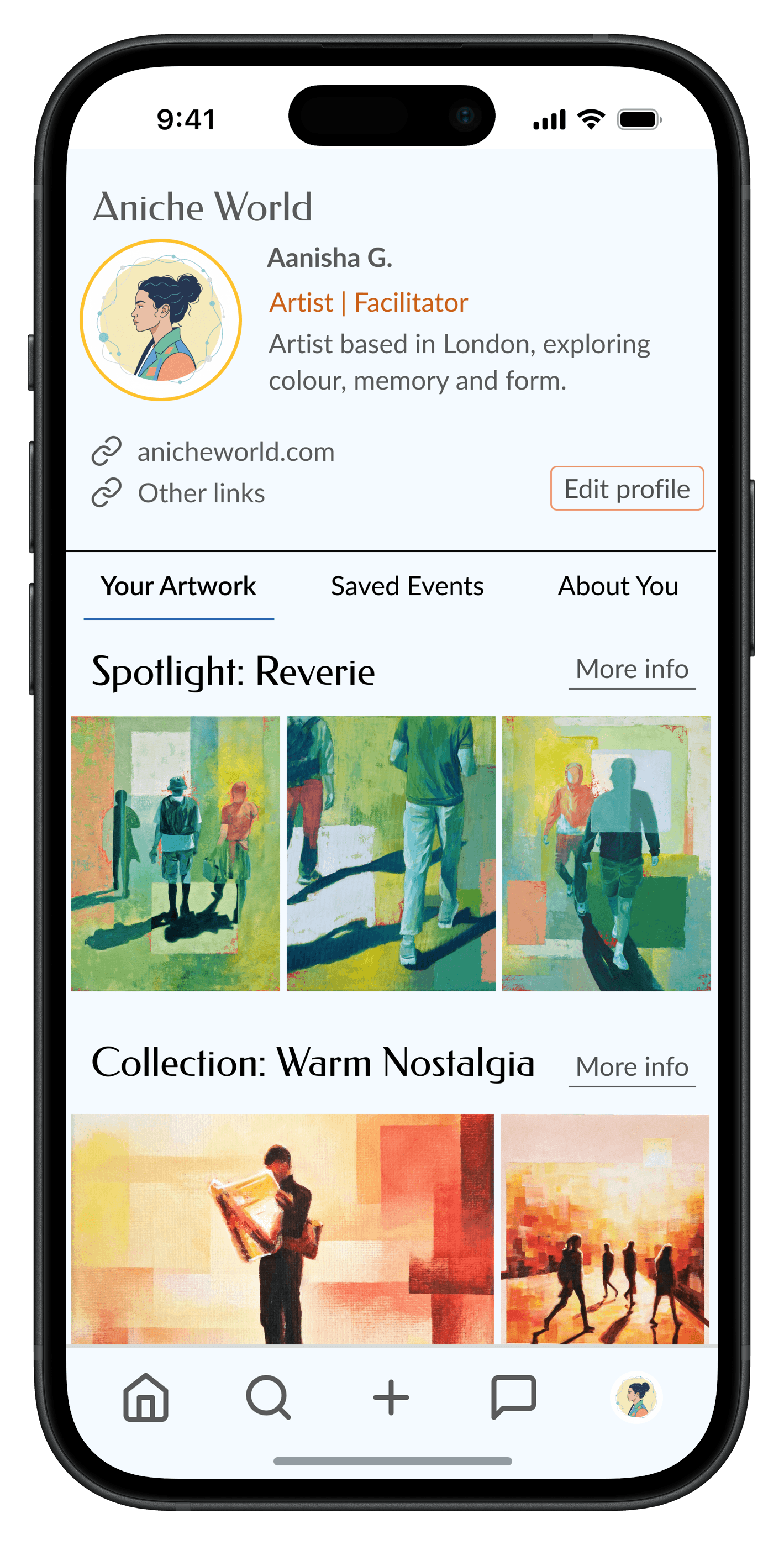
Preview prototype
Key takeaways and next steps
While running user tests, I realised just how much branding and tone matter — participants really responded to visuals that felt professional and credible.
Something that caught me by surprise was how much artists preferred application flows that felt like job applications. They liked the familiarity, the structure, and the transparency, so I ended up using that approach on the Events page, particularly in the Details section.
I also saw how important it was for artists to have easy access to organiser info and contact details. Beyond that, artwork presentation emerged as a real priority. I’d suspected it mattered, but testing confirmed it: artists wanted their work to take centre stage. That insight led me to create dedicated artwork preview pages, with context and inspiration built in.
What I'd do next:
Refine onboarding microcopy, further improving typography accessibility
Introducing clearer progress indicators during applications.
Expand the opportunity-matching logic, introduce messaging and feedback loops between artists and organisers.
Back to top